An AI learning space for schools & educatorsExplore classroom possibilities
ABOUT US

Put thinking at the heart of learning.

As AI generates more content, students still need to ask questions, understand evidence, make judgments and explain their choices.

THE PEOPLE BEHIND THE MARK OF THINKING

Educators, researchers and builders.

Our backgrounds span education, psychology, sociology, linguistics and engineering. We bring curriculum design, learning research and product development together to consider the support students need.

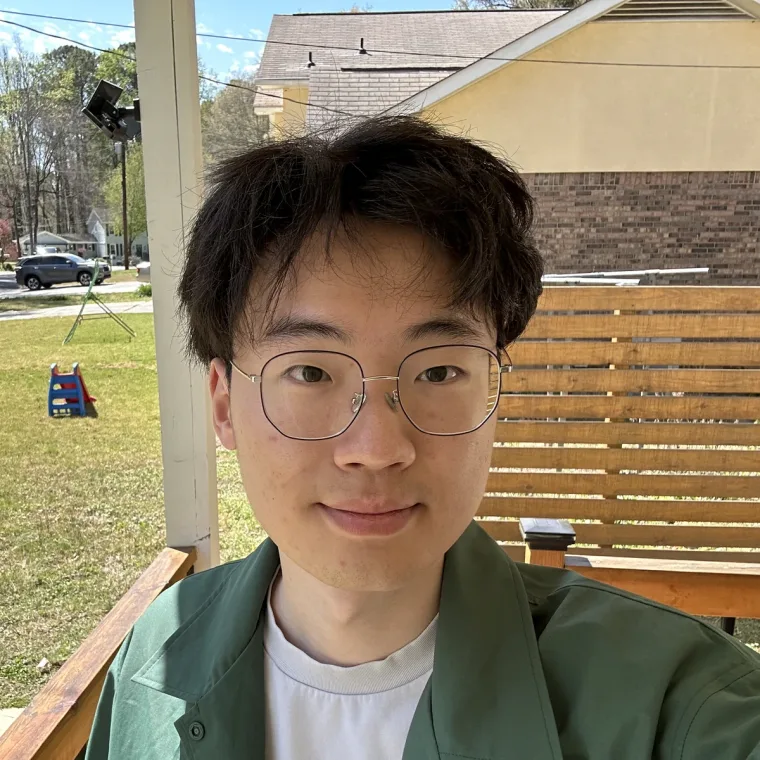
Yujie Chen
Founder

Yujie Chen

An interdisciplinary background in education, psychology and sociology, with study and work across Germany, the United States and Australia. At UNITAR in New York she worked on media and information literacy, education for sustainable development and AI curriculum design. Years of collaboration across countries, cultures and education systems have made her expert at turning a complex issue into something that can be learned, assessed and acted on.

Yuxin Hou
Founder

Yuxin Hou

A Tsinghua graduate with an interdisciplinary background spanning engineering, education, psychology and sociology, and more than a decade in AI and education. She was co-founder and CTO of China's first adaptive AI teacher, and worked on social-emotional learning curriculum design at UNICEF. One question runs through all of it: what the core competence of the AI era actually is, and how it is actually acquired.

Technical adviser

Xinsong Yang

An interdisciplinary background in computer science and the social sciences, with years of software engineering and product work at Tubi and iQIYI on large-scale consumer products and the data systems behind them. Lately his attention has been on how generative AI changes the way people learn, think and decide — and on what an AI-native product should therefore be.

Xiaozhuo Zhou
Curriculum intern

Xiaozhuo Zhou

A master's in international Chinese-language education from Peking University, with an interdisciplinary background in linguistics, cognitive science and psychology — second-language acquisition, experimental pragmatics, psycholinguistics. She has captained a university debate team, chaired its student psychology society, and taught Chinese across cultures. Her question is how complex knowledge becomes a learning experience clear enough to take part in.

Haoran Guo
Research intern

Haoran Guo

A PhD candidate in management science and engineering at Tsinghua University.

Dear educators,

Through my work in media and information literacy, education for sustainable development and AI curriculum design, I keep returning to one question: as AI provides more answers, what do students need to learn? Collaborating across countries, cultures and education systems has made me particularly interested in how students understand information, make judgments and put ideas into practice.

I want students to question where a claim comes from, explain why they accept a piece of evidence and be willing to revise a judgment when they encounter a counterexample. Those abilities take practice through concrete tasks: reading an article, developing an argument, conducting an investigation or pursuing a project they care about.

The Mark of Thinking brings courses, interactive thinking tools and AI support into these learning processes. Students can draw on questions, methods and feedback while making their own choices, writing their own assignments, and reviewing and revising their work. A question I return to in designing the product is: what support will leave a student better equipped for the next task?

I also want educators to have a clearer view of how learning happens. How students use information, where they change their minds and how AI contributes are all worth revisiting. Learning records and process assessment give those conversations a concrete starting point. Educators bring their classroom observations and knowledge of their students to deciding what guidance comes next.

This is why I am building The Mark of Thinking. I look forward to working with schools and educators on real learning tasks, listening carefully to students and teachers, and improving the support students receive.

Yujie ChenFounder, The Mark of Thinking

Start with the learner’s own task.

Students bring an article, a writing task or a project into The Mark of Thinking. AI offers questions and feedback. Interactive tools help them examine sources, organize evidence and develop arguments. Their choices leave a record of thinking.

We value outcomes and the process that produces them. Learning records and process assessment help students revisit their methods and give educators context alongside classroom observations.

01

Student agency

Students own their assignment text, key judgments and revisions. AI’s contribution should be visible.

02

Active participation

Questions, cards, choices and practical actions invite participation and practice of reusable methods.

03

Clear support

Conversations have clear goals, tools have concrete uses and feedback helps students choose their next step.

04

Evidence of process

Record platform interactions and tool use to provide concrete evidence for reflection and teaching.

THE NEXT CHAPTER OF LEARNING

Bring AI into learning. Keep students thinking.

Start with a reading, a piece of writing or a project. See how the Mark of Thinking can support your teaching.