ASSESSMENT GROUNDED IN THE PROCESS
How deeply did they think?
How independently did they judge?
The same source check can reveal how a student handles evidence and who initiated the check. Process assessment considers cognitive depth and intellectual autonomy separately, grounded in learning records.
ONE EVENT. TWO QUESTIONS.A student finds evidence that challenges their position.
Depth: did they understand the counter-evidence, check its source and revise their argument? Autonomy: did they initiate the check or respond to a prompt? Interpret both through the records of this task.
INSIDE THE RESEARCH REPORT
Nine sections connect
the process with feedback.
The research report brings together activity records, materials, the two assessment axes and suggestions. Examine the evidence and discuss the next steps.
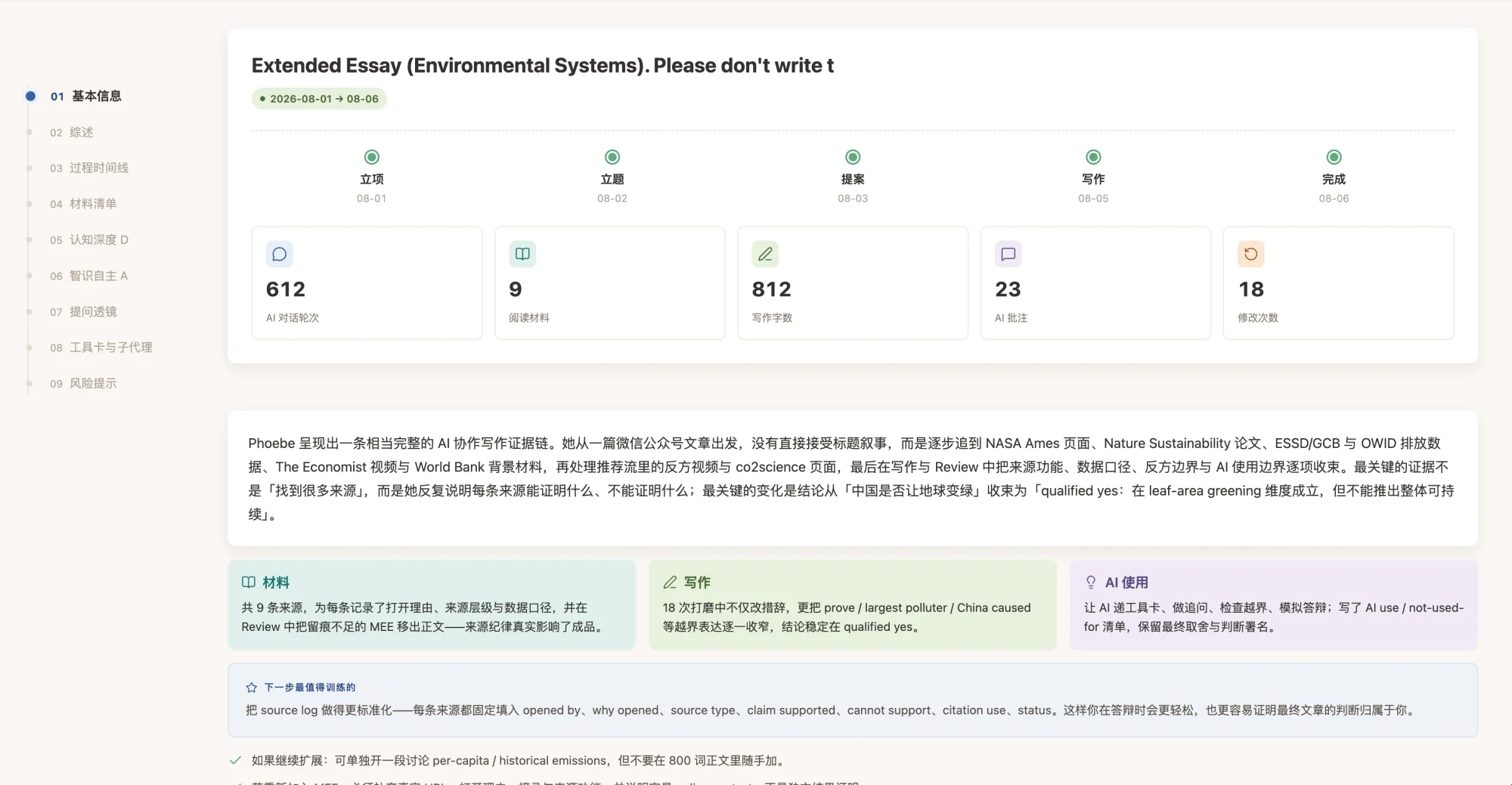
01Basics
Title, dates, milestones, and counted numbers: AI turns, materials, words, comments, revisions.
02Abstract
A paragraph on the route she actually took, plus one line each on materials, writing and AI use.
03Timeline
Chat, reading room, map, writing, retrospective — laid out in order.
04Materials
Every source: when it arrived, where from, and what job it does in the argument.
05Depth D1–D6
Per dimension: a level, a verdict, clickable evidence, one suggestion.
06Autonomy A1–A6
Same structure — plus whether each move was self-initiated or prompted.
07Prompt lens
3–10 of her actual prompts, with what worked and what to change.
08Cards & sub-agents
Which card, at which station, why it was offered, and what changed downstream.
09Risk signals
Ghost-writing, missing sources, broken warrants, shifting denominators, tangents — each with advice.